Home / L-Arginine Guide
Ingredient guide · November 2026

L-Arginine, Explained: The Amino Acid Behind Nitric Oxide

L-arginine is the amino acid at the heart of most nitric oxide supplements, Honey Flush among them. This guide explains what it is, how the body uses it, the forms you see on labels, the doses studied and what the NIH says about its safety.

Amino acidNitric oxideBase vs AKGNIH cited
See Honey Flush Pricing Label Forms Explained
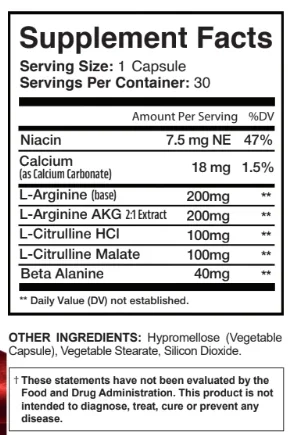
Honey Flush Supplement Facts panel listing L-arginine base and L-arginine AKG

Editorial disclosure: tryhoneyflush.com is an independent guide and is not the manufacturer or distributor of Honey Flush. It contains affiliate links, and we may earn a commission if you purchase through them, at no extra cost to you. These statements have not been evaluated by the Food and Drug Administration. Honey Flush is not intended to diagnose, treat, cure, or prevent any disease. Consult a healthcare professional before use.

The amino acid

What Is L-Arginine?

L-arginine is one of the amino acids the body uses to build proteins. It comes from food, especially animal products and nuts, and a typical diet supplies about 4 to 5 grams a day; the body also makes it, mainly in the kidneys, from another amino acid, citrulline. The "L" names the natural form found in food and in the body. The NIH Office of Dietary Supplements covers arginine in its fact sheet on supplements for exercise and athletic performance.

NIH ODS fact sheet
Nitric oxide

L-Arginine and Nitric Oxide

Part of the body's arginine is turned into nitric oxide, a small signalling molecule that the ODS fact sheet describes as a potent vasodilator: it relaxes the walls of blood vessels, which can increase blood flow to muscle. That link is the reason arginine appears in so many "nitric oxide" and "nitric oxide booster" supplements. Nitric oxide itself is never in the bottle; the body makes it.

From food

Meat, poultry, fish, dairy, nuts and seeds all supply arginine as part of their protein.

Made in the body

The kidneys make arginine from citrulline, which is why the two are so often sold together.

Turned into nitric oxide

A small share of arginine becomes nitric oxide in the lining of blood vessels.

Forms

L-Arginine Forms on Supplement Labels: Base, HCl and AKG

Form on the labelWhat it isIn Honey Flush
L-arginine (base)The plain amino acid200 mg
L-arginine HClArginine as a hydrochloride salt, common in capsules and powdersNot used
L-arginine AKG (2:1)Arginine combined with alpha-ketoglutarate, a natural molecule of energy metabolism; two parts arginine to one part AKG200 mg

Because salts and compounds carry other molecules, 200 mg of arginine AKG supplies less than 200 mg of arginine itself.

Research and safety

L-Arginine Benefits and Doses: What the Research Shows

The doses studied

The ODS fact sheet reports that most arginine trials used 2 to 10 g a day in a single dose, or up to 20 g a day split into three. In exercise studies, 2 to 20 g a day showed little to no effect on performance. That is the honest summary of "L-arginine benefits" for athletes: much studied, with mixed results.

Safety

Up to 9 g a day for several days or weeks appears safe and well tolerated. At 9 to 30 g a day the most common effects are digestive, such as nausea or loose stools. The safety of high doses beyond three months is unknown. Anyone who takes prescription medication should check with a doctor first.

An example

L-Arginine in Honey Flush

Honey Flush lists two arginine lines per capsule: 200 mg of L-arginine base and 200 mg of L-arginine AKG 2:1, alongside two forms of L-citrulline (200 mg in all), niacin, calcium and beta-alanine. Those amounts are small next to the gram doses in the studies above; Honey Flush is built as a one-capsule daily routine rather than a sports dose. The full panel is on the Honey Flush ingredients page.

See Honey Flush Pricing L-Citrulline Guide

Questions

L-Arginine Guide: Your Questions, Answered

What is L-arginine?

An amino acid the body uses to build proteins and to make nitric oxide. It comes from protein foods, especially animal products and nuts, and the body also makes it from citrulline.

What does L-arginine do?

Besides building proteins, part of it is converted into nitric oxide, which the NIH describes as relaxing blood vessels and increasing blood flow to muscle.

Is L-arginine a nitric oxide supplement?

It is the amino acid most nitric oxide supplements are built on, together with citrulline. Nitric oxide itself is made by the body, not taken in a capsule.

How much L-arginine is safe per day?

The NIH fact sheet reports that up to 9 g a day for several days or weeks appears safe and well tolerated; higher doses mostly cause digestive effects. Check with a doctor first if you take medication.

What foods contain L-arginine?

Protein foods such as meat, poultry, fish, dairy, nuts and seeds. A typical diet supplies about 4 to 5 g a day.

What is arginine AKG?

Arginine alpha-ketoglutarate, a compound of arginine with alpha-ketoglutarate. The 2:1 on a label means two parts arginine to one part AKG.

L-arginine or L-citrulline: which is better?

They work as a pair: the body turns most citrulline into arginine. The L-citrulline guide explains why many formulas include both.

How much L-arginine is in Honey Flush?

400 mg of arginine compounds per capsule: 200 mg of L-arginine base and 200 mg of L-arginine AKG.

L-Arginine and L-Citrulline in One Daily Capsule

Honey Flush lists L-arginine base and AKG with two forms of L-citrulline, every amount printed, and a 180-day guarantee on direct orders. See the full label first.

Visit gethoneyflush.com